
How to start a readymade garment shop in India: licences, stock and software
By the Ezzy ERP team · · 7 min read
A readymade garment shop is one of the most common first businesses in India, and one of the most competitive. The shops that last are the ones that pick a clear customer, buy carefully, and know their stock and cash from day one.
This guide walks through the steps in order, from choosing what to sell to billing your first customer.
1. Pick your niche and customer
Decide who you are selling to before you choose a shop: men's casual wear, ladies' ethnic wear, kids wear, sarees, or a family store. A clear niche makes buying, display and marketing simpler, and helps you stand out from the shops around you.
2. Choose the location
- Footfall of your target customer, not just total footfall.
- Nearby competition: a cluster of clothing shops can help if your niche is different.
- Rent you can pay from sales in a slow month, not a festival month.
- Space for trial rooms, display and a small stock room.
3. Registrations you will need
| Registration | What it is |
|---|---|
| Shop and Establishment registration | Under your state's Shops and Establishments Act, from the local municipal or labour office |
| GST registration | Required once turnover crosses the limit for goods (₹40 lakh in most states); many shops register earlier to claim input tax credit and buy from GST suppliers |
| Udyam (MSME) registration | Free online registration that helps with bank loans and schemes |
| Current account | A bank account in the shop's name for UPI and card payments |
| Trade licence | Required by some municipal corporations; check locally |
Rules and limits vary by state and change from time to time. Check with your CA before you open.
4. Find suppliers and buy your first stock
Most shops buy from wholesale markets and manufacturers' agents. Well-known hubs include Surat for sarees and dress material, Tiruppur for knitwear and T-shirts, Ludhiana for woollens, and the wholesale markets of Mumbai, Delhi and Kolkata for readymade garments.
Buy less than you think for the first season. Buy the middle sizes deeper and the end sizes thinner, and keep cash for re-orders of what sells.
5. Set up the counter
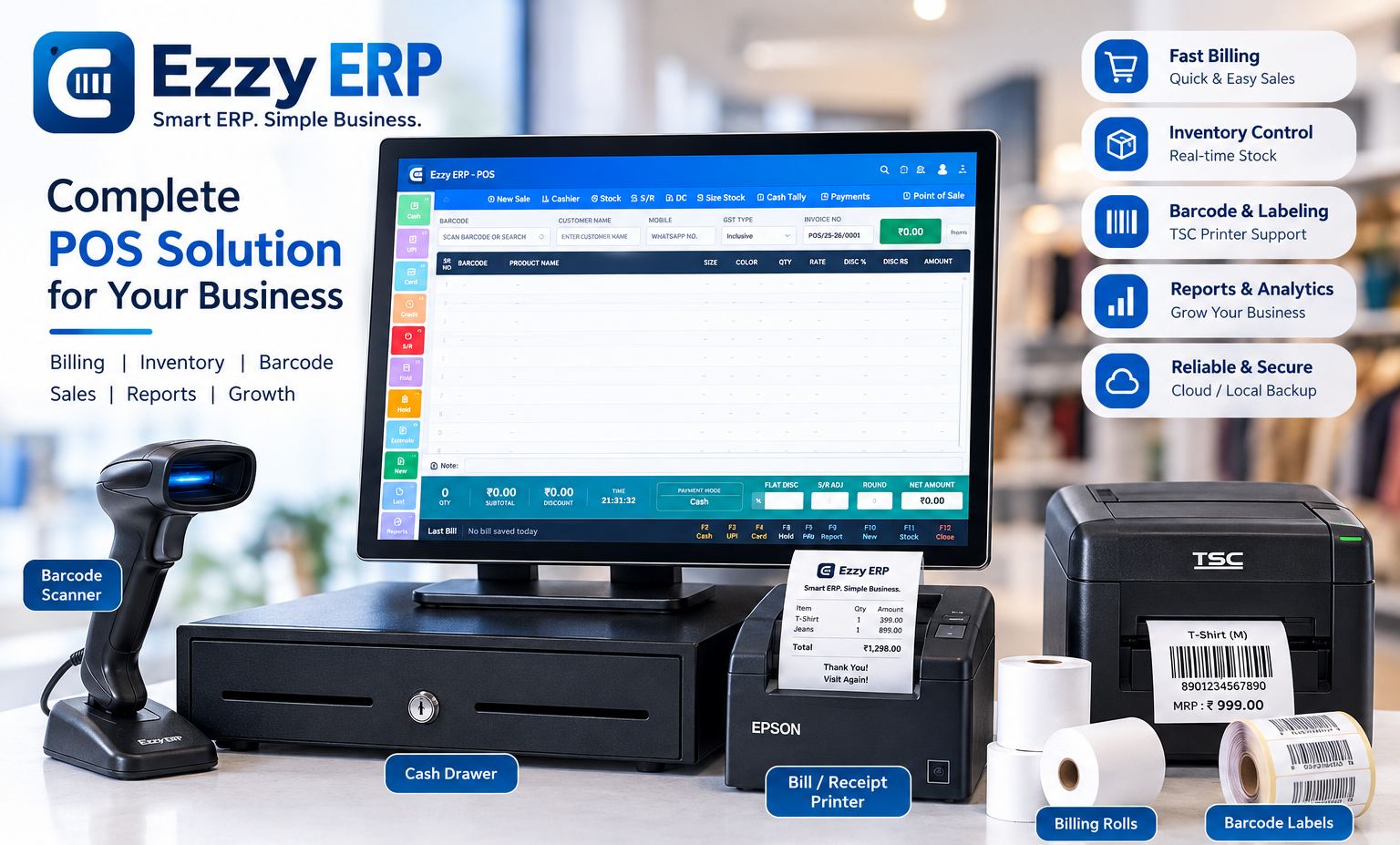
- A computer or tablet with billing software, or the Android app for a small start.
- An 80mm thermal receipt printer and a barcode scanner.
- A barcode label printer for tags; see which barcode printer to buy.
- UPI QR code and a card machine.
6. Get the GST and stock right from day one
Clothing GST is 5% up to ₹2,500 a piece and 18% above it, decided per piece. Our GST on clothes guide explains how to bill it.
Enter every purchase in a size grid and tag every piece before it goes on the rack. Our guide to size and colour stock shows the method.
7. Choose billing software that grows with you
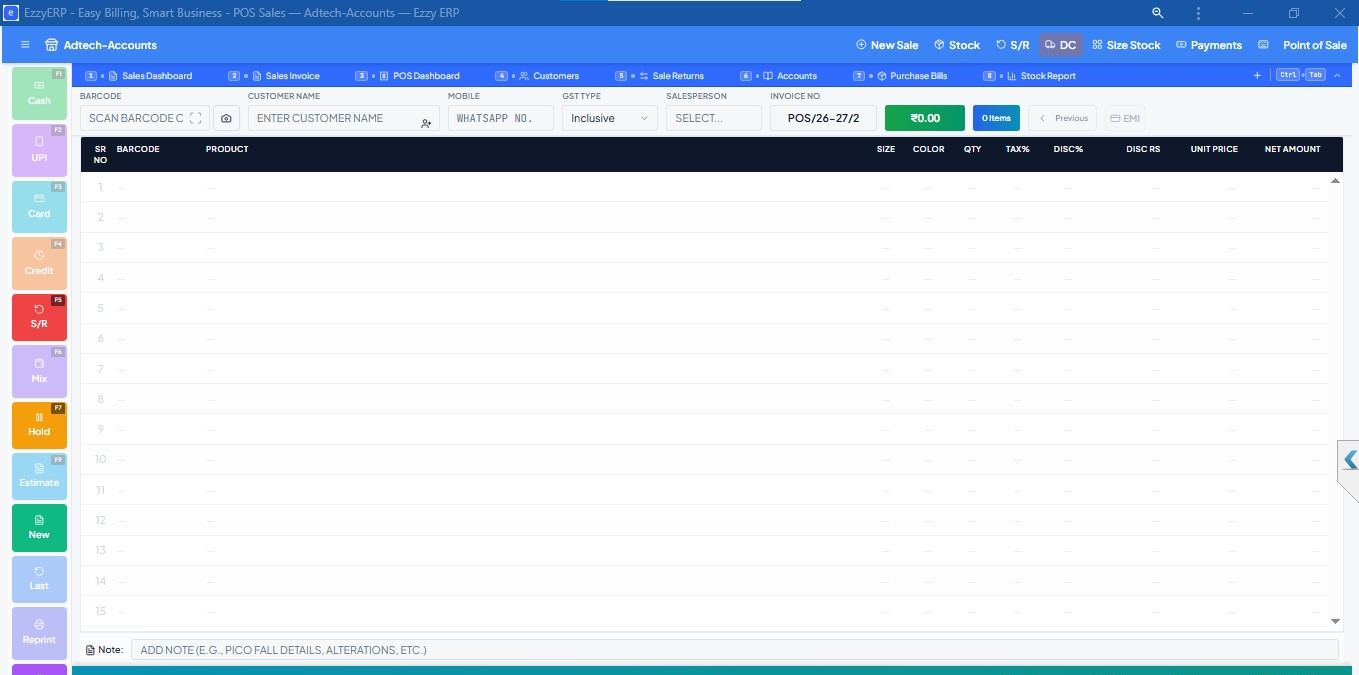
Pick software you will not have to change when you add a second counter or branch. Ezzy ERP garment billing software gives you size-colour stock, barcode tags, GST billing, customer credit on WhatsApp and an Android app, with hardware, setup and training from one team. Read our buyer's guide for questions to ask in any demo.
Frequently asked questions
What licences do I need to start a clothing shop in India?
Usually a Shop and Establishment registration, GST registration (compulsory above the turnover limit, often taken earlier), a current account, and optionally Udyam registration and a local trade licence. Check your state's rules with a CA.
Is GST registration compulsory for a garment shop?
It is compulsory once turnover for goods crosses the limit, ₹40 lakh in most states. Many shops register earlier so they can claim input tax credit on purchases.
Where can I buy wholesale clothes for my shop?
Common hubs include Surat (sarees, dress material), Tiruppur (knitwear), Ludhiana (woollens) and the wholesale markets of Mumbai, Delhi and Kolkata, as well as brand distributors.
Do I need billing software for a new garment shop?
It is the easiest way to keep size-wise stock, GST and customer credit right from day one. Ezzy ERP offers a free demo with your own products.